Recycling in Kuala Lumpur — My Six-Month Experience

Even before I moved to Taiwan for study and work, I convinced my family to recycle and compost. At home, we did waste segregation, we brought our own containers for takeout, we did composting. So after staying in Taiwan for six years, where the country has stronger recycling culture, I moved back home early this year for good. I believe my family is not doing much as the waste police of the house was not home, so I decided to take this challenge again.
Plus, I am excited to see what kind of trash we generate at home. At home, we tend to sort out as many category as we can. For example, paper, plastic, metal cans, glass bottles, electronic products, polystyrene, used clothes, old bed, sheets, and pillowcases, undergarments, bags, food, scraps, and lastly general waste. And after six months of being the police, I am able to figure out the homes of these golden resources. And I would like to share with you my insights and experience here.
Actually, there are SO MANY options for recycling in Kuala Lumpur these days compared to six years ago. So here I would like to share some insights here with you.
The OG of recycling organization is no doubt Tzuchi Malaysia. They have hundreds of volunteers operating weekly or monthly recycling spots across Klang Valley and Malaysia, they accept quite a number of categories, even CDs and lightbulbs. However, regarding plastic categories, they only accept hard plastics (#1 PET, #2 HDPE and #5 PP). They try to make recycling effort as easy as possible, they gathered a list of their recycling spots across Klang Valley so that public does not have to find it themselves. Can refer to the link here.

Infographic designed by TzuChi Malaysia. Shows the categories of the recycled items they accept and don’t. Malls around town (e.g. Leisure Mall in Cheras, MyTown in Maluri, IOI Mall in Puchong, OneUtama in Damansara and of course there are so many more in the Klang Valley) have recycling corners as well. These malls are operated by large (possibly listed) corporations. Obviously, they are strongly encouraged to conduct certain CSR related initiatives, at least the recycling effort is the easiest way to do something and show results in the sustainability report. To make it easily accessible, the mall management allocate the bins in the parking lot nearby the mall entrance, which is convenient for nearby residents to stop by and drop off the recyclables. So far, from what I experienced, they accept the simple bunch such as paper, plastic, glass, metal cans, used clothes.

Recycling corner at MyTown Mall Kuala Lumpur PJ Eco Recycle Plaza, one of the best recycling centres I visited that operated under local government. Located in Sungai Way Petaling Jaya, easy access as it is located beside the main road of PJ. Aside from the normal recyclable categories, one highlight that I would like to mention is that they accept polystyrene! One corner they open a second-hand clothing items for sale, which I find it pretty amazing because this shows that they screen everything they receive. The other corner they offer venue booking service, we can rent the space out for conducting workshops and meetings.

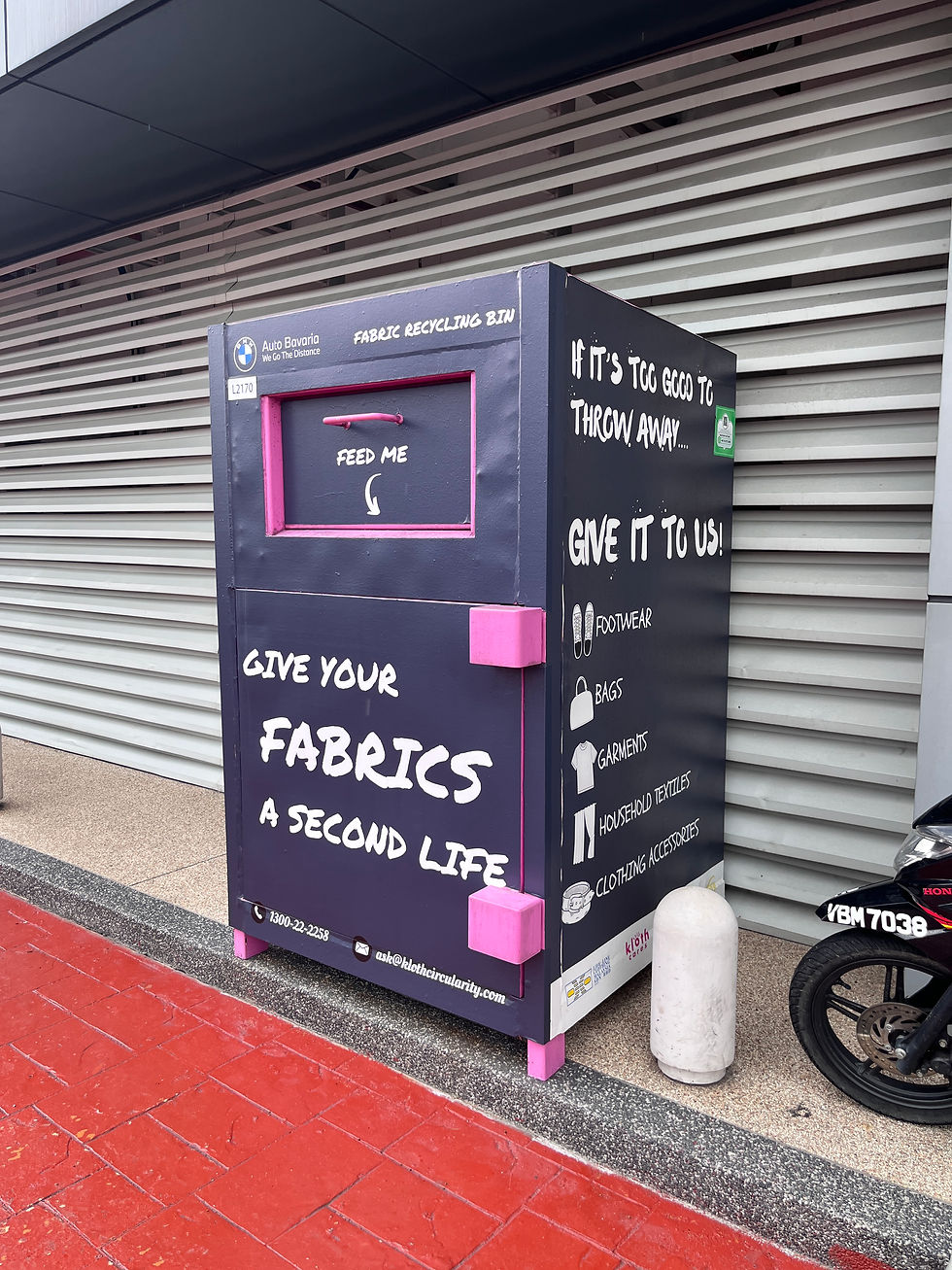
Kloth Cares bins is by far my favourite place to drop off used clothes and bags. One highlight that I would like to mention is that they accept towels, shoes, soft toys, pillow case, bed sheet and even undergarments! Kudos to the organization! Their main mission is to stop clothing and textiles from going into landfill and transform the material. So they accept everything textile related. There are many Kloth Cares bins setting up around Klang Valley, feel free to check out their website to find out the nearest bin (Website link).
Let's say you want to "Marie Kondo" your home, and there are items that are still in good condition. You can always think about selling them to people on Facebook Marketplace. But it really depends sometimes, some items are worth more when you give them away. There are many Facebook groups such as Beli Nothing Project (I am sure there is a similar one in your district, just get on Facebook and search it around). The process is simple:
Take photos of the stuff you want to give away
Write a post on the group and mention where and when to meet
Wait for other users to comment what items they want, you can even choose who you want to give your stuffs to
Set up a time and place with the users and hand over
Here's a group link for you to start joining: Link
If you think you are doing this alone, don’t worry. There are so many people in Klang Valley and Malaysia doing the same thing with you. Yes they are all online and it is absolutely FREE to join this Facebook group called Zero Waste Malaysia. They are a NPO-based organization, the Facebook group is a great platform for users to share insights on how to upcycle, recycle all kinds of items and most importantly, how to swap alternatives so that we buy in bulk, tips on where to buy dish soaps without packagings and so much more. A great place to start if you would like to practice zero waste lifestyle.
Now we have more infrastructure for us to conduct recycle (at least for Kuala Lumpur people), the next question would be: “Why there are people still do not recycle?”
I am sure there are several common responses:
There is no consolidated map of recycling spots in Malaysia, so I don't know where to throw.
I do not know how to segregate the waste.
People simply do not have the awareness to recycle, not putting it as a priority. So why should I do it too.
...and more.
And I believe there are solutions for each reason!
There’s no consolidated map of recycling spots in Malaysia? Zero Waste Malaysia (the NPO as I mentioned previously) created a interactive digital map for the public. Not only recycling spots, they also added zero waste shops, repair shops, and refill stations as well. Each spot on the map has thorough description about it so that public understand better. Very easy to use, a great place to start your recycling journey!
Click this link to check the interactive digital map: Link
I do not know how to segregate waste? Here is a couple of tips for you:
Make an inventory from your trash bin
Know your trash first. Find out what kind of trash do you have and list them out. Collect your recyclables at a corner of your place, make sure to wash and dry them before putting into the corner (we do not want you have a dirty home space too).
Plan ahead like a logistics operation
After you have several bags full of recyclables and need an offload to a recycling centre, research which organization accepts which items and make a fun trip out of it. Of course, at the end of the trip, reward yourself with a coffee! You did good!
Knowing your action can contribute less to the landfill and incineration in this country
This is a big win! And this definitely motivates us more to recycle.
Of course, there are still quite a big portion of trash that we cannot recycle. For example, single use utensils and containers (plates, bowls and drinking cups, straws) at restaurants, food courts and night markets. More terrifyingly, delivery parcel packagings from online shopping platforms, food packagings and so on. Sadly, post-COVID eras, hygiene issue and convenience, Malaysians are generating waste more and more day by day.
As a person who does the recycling work at home, I do feel tired and frustrated. Segregating waste at home takes one morning for me, and if the waste is more one weekend, might take a whole day for me. There are moments I understand why people just throw everything into the bin and walk away. But then I think about where that bin leads — the landfill, the incinerator, worst of all, the ocean....so I keep going.
Household waste segregation shouldn't be a one-man job, it should be everyone's responsibility at home. If you live with family, rope them in. Assign roles, make it a weekend routine, turn it into something you do together rather than something one person carries alone.
And if you're just starting out, don't try to do everything at once. Pick one category, find one drop-off point, and do that first. Then build from there. Small, consistent steps beat a perfect system that never gets started.
I hope this helps you start, or keep going. We're all figuring it out together.


Comments